Top 20 Famous Poems of All Time
Famous poems of all time include works like Maya Angelou’s ‘Still I Rise’ (1978), Robert Frost’s ‘The Road Not Taken’ (1916), and Shakespeare’s Sonnet 18 (1609). These poems are recognized for their cultural impact, emotional depth, and enduring presence in literature, education, and popular culture across centuries.
Are you looking for famous poems to study for your next essay? Then, check out these top 20 poems to inspire your next writing project.
Poetry has a way of capturing human emotion and conveying it in the written word through rhyme and meter. Many famous poets have made their mark on literature worldwide, writing everything from love poems to nonsense poems that explore the way words can work together to create verse.
Taking a closer look at famous poems can help to truly understand the impact that poetry has had. Here are 20 works of famous poetry that have impacted the world of literature.
1.“Still I Rise” by Maya Angelou

Maya Angelou via Wikipedia, Public Domain
“Still I Rise” is in the third poetry collection by American poet Maya Angelou. This poem pays homage to the human spirit even as it overcomes discrimination and hardship. To write, Angelou tapped into her experiences as a black American woman.
In the poem, Angelou talks bout how others have downplayed her, her accomplishment, and her people, trying to break her spirit. And yet, she rises above these problems to find success.
“You may write me down in history With your bitter, twisted lies, You may trod me in the very dirt But still, like dust, I’ll rise.”
2. “Stopping by Woods on a Snowy Evening” by Robert Frost
Written in 1922, “Stopping by the Woods on a Snowy Evening” uses imagery, personification, and repetition to create a memorable poem. It displays iambic tetrameter and appears on the surface to have a simple meaning. This poem is distinctive in how simple it appears, yet how well it holds to the meter and rhyme scheme. Simplicity and accuracy are not easy to attain.
“Whose woods these are I think I know. His house is in the village, though; He will not see me stopping here To watch his woods fill up with snow.“
3. “The Road Not Taken” by Robert Frost
Perhaps one of the most commonly-studied poems in American literature, “The Road Not Taken,” talks about a young man traveling through the forest when he comes to a fork in the road. He chooses the “one less traveled by” and states it has made all the difference. The final lines of this poem have become part of modern society, showing up in movies, commercials, and graduation speeches every year.
Many people know the final lines of this poem even if they do not know they came from Frost. Those lines have echoed through countless book titles, films and graduation speeches, and that reach, combined with the poem’s quiet complexity, earns it a place on this list.
“I shall be telling this with a sigh Somewhere ages and ages hence: Two roads diverged in a wood, and I - I took the one less traveled by, And that has made all the difference.”
4. Sonnet 18 by William Shakespeare
Perhaps one of his most famous love poems, Sonnet 18, starts with one of Shakespeare’s most iconic lines. As he compares his lady love to a summer’s day, hearts swoon, and romantics take note.
Sonnet 18 follows the 14-line structure of most English sonnets. It has three quatrains and a couplet and follows iambic pentameter. The poem’s romantic lines make it a favorite to quote to an object of affection.
“Shall I compare thee to a summer’s day? Thou art more lovely and more temperate. Rough winds do shake the darling buds of May, And summer’s lease hath all too short a date.”
5. “Do Not Go Gentle into That Good Night” by Dylan Thomas
This famous poem by Dylan Thomas is one of the poems most often read at funerals. It captures the feelings brought on by death and highlights how people who love someone want them to fight against the reality of the end of life.
“Do Not Go Gentle into That Good Night” is particularly popular because it sounds so beautiful when read aloud. Thomas got much of his income from working on the radio, and as such, he learned the power of the spoken human voice. This understanding is reflected in the cadence of his verses.
“Do not go gentle into that good night, Old age should burn and rave at close of day; Rage, rage against the dying of the light.”
6. “I Wandered Lonely as a Cloud” by William Wordsworth
Also known as “Daffodils,” this famous poem from William Wordsworth was written in the early 1800s. It took its inspiration from a walk Wordsworth took with his sister around Glencoyne Bay, where the two came upon a large field of daffodils.
“I Wandered Lonely as a Cloud” is popular due to its rich imagery. When someone reads it, they can picture the daffodils dancing on the hill. However, unlike other famous poems, it does not necessarily have a double meaning but is simply a tribute to something beautiful in nature.
“I wandered lonely as a cloud That floats on high o’er vales and hills, When all at once I saw a crowd, A host of golden daffodils; Beside the lake, beneath the trees, Fluttering and dancing in the breeze.”
7. “How Do I Love Thee?” by Elizabeth Barrett Browning

Elizabeth Barrett Browning via Wikipedia, Public Domain
How Do I Love Thee” is the title of Sonnet 43 by Elizabeth Barrett Browning. This romantic poem indicates that the different ways the speaker loves the object of her affections simply cannot be counted.
Throughout the poem, Browning exudes her passionate love for her husband. She even indicates that her love fills the quiet moments that happen in a home when two people live together. It follows the traditional abba, abba, cd, cd, cd sonnet rhyme scheme.
“How do I love thee? Let me count the ways. I love thee to the depth and breadth and height My soul can reach, when feeling out of sight For the ends of being and ideal grace.”
8. “She Walks in Beauty” by Lord Byron
This short, lyrical poem follows the iambic tetrameter pattern. It was written in 1814 by Lord Byron, who was inspired by his cousin’s wife, Anne Beatrix Wilmot, when he saw her at a party. “She Walks in Beauty” later appeared in Byron’s Hebrew Melodies, which the composer Isaac Nathan set to music, and it is considered an excellent example of Romanticism in poetry.
This poem is on the list of famous poetry because of how many times it has been quoted. It has references in The Philadelphian, television shows like M.A.S.H., Bridgerton, and White Collar, among others.
“She walks in beauty, like the night Of cloudless climes and starry skies; And all that’s best of dark and bright Meet in her aspect and her eyes; Thus mellowed to that tender light Which heaven to gaudy day denies.”
9. “The Waste Land” by T.S. Eliot
Considered one of the most influential poems of the 20th century, this poem has dissonance that mirrors what Eliot felt was the fracture of his time. Even though it was written for the 20th century, it still holds value in modern society when society still feels quite disjointed.
Throughout the lines of this poem, Eliot explores his disgust at the state of society following World War I. “The Waste Land” explores the thought of spiritual emptiness, which is what Eliot believed he saw in the world around him.
“April is the cruelest month, breeding Lilacs out of the dead land, mixing Memory and desire, stirring Dull roots with spring rain.”
10. “The Raven” by Edgar Allan Poe
Published in 1845, “The Raven” was an immediate sensation that made Edgar Allan Poe famous in his own lifetime. It is a poem about grief, using onomatopoeia in the raven’s tapping and rapping at the chamber door.
The insistent repetition drives the reader toward the final, despairing “nevermore.” Poe’s wife, Virginia, was ill with tuberculosis while he wrote it, and she died in 1847, two years after the poem appeared. Her long illness shadows the poem’s preoccupation with loss, though it did not, as is sometimes claimed, follow her death.
“Once upon a midnight dreary, while I pondered, weak and weary, Over many a quaint and curious volume of forgotten lore - While I nodded, nearly napping, suddenly there came a tapping, As of some one gently rapping, rapping at my chamber door. ’Tis some visitor,’ I muttered, ‘tapping at my chamber door - Only this and nothing more.’”
11. “Jabberwocky” by Lewis Carroll
Lewis Carroll was a novelist, but he often used poetry in his novels. “Jabberwocky” is a nonsense poem that was part of Carroll’s 1871 novel Through the Looking-Glass. It tells the story of killing a mythical creature named “the Jabberwock.” In the book, Alice finds the poem in a book when she visits the Red Queen.
With so many unknown words, “Jabberwocky” confuses even Alice in the book. The poem is in ballad style, an exciting way to study the style with nonsensical words. Yet it leaves many unanswered questions, which fits the world of Wonderland that Carroll is trying to create.
“’Twas brillig, and the slithy toves Did gyre and gimble in the wabe: All mimsy were the borogoves, And the mome raths outgrabe.”
12. “O Captain My Captain” by Walt Whitman
“O Captain, My Captain” is a poem that shows an extended metaphor style. Whitman wrote it in 1865 after the assassination of President Abraham Lincoln. The poem is a tribute to Lincoln and his impact on the country during such a pivotal time in history.
In the three-stanza poem, Whitman compares Lincoln to a ship’s captain. Whitman also uses the literary device of juxtaposition to show the difference between the victory the country was experiencing and the death of its leader, who could not enjoy the victory. In the final stanza, he uses personification when talking about the shores, potentially representing the masses of people welcoming the ship, not knowing that the captain is slain.
“O Captain! my Captain! our fearful trip is done, The ship has weather’d every rack, the prize we sought is won, The port is near, the bells I hear, the people all exulting, While follow eyes the steady keel, the vessel grim and daring; But O heart! heart! heart! O the bleeding drops of red, Where on the deck my Captain lies, Fallen cold and dead.”
13. “Invictus” by William Ernest Henley
“Invictus” was written in 1875 by William Ernest Henley and first published, untitled, in 1888. Its final quatrain is the most famous part, declaring the speaker the master of his fate and the captain of his soul.
Henley had tuberculosis of the bone from about the age of 12, and in his late teens (around 1868 to 1869) his left leg was amputated below the knee. Years later, facing the loss of his other foot, he underwent a long hospital stay in Edinburgh under the pioneering surgeon Joseph Lister, whose antiseptic treatment saved it. He wrote “Invictus” during that stay, which is why its defiance reads as hard-won rather than abstract.
“It matters not how strait the gate, How charged with punishments the scroll, I am the master of my fate: I am the captain of my soul.”
14. “The Love Song of J. Alfred Prufrock” by T.S. Eliot
“The Love Song of J. Alfred Prufrock” is another famous piece by T.S. Eliot. It was his first professionally-published poem, and literary critics believe it marked the initiation of the shift between Romantic verse and Modernism.
The poem looks at the psyche of a modern man, who is simultaneously eloquent but emotionally stilted. In the poem, the speaker indicates he wants to reach out to his love interest, only to feel he cannot do so. What follows is a monologue that laments the lack of emotional connection that the author can create. Looking for more famous poems, check out our list of Mary Oliver poems.
“Let us go then, you and I, When the evening is spread out against the sky Like a patient etherized upon a table; Let us go, through certain half-deserted streets, The muttering retreats Of restless nights in one-night cheap hotels And sawdust restaurants with oyster-shells: Streets that follow like a tedious argument Of insidious intent To lead you to an overwhelming question… Oh, do not ask, “What is it?” Let us go and make our visit.”
15. “Fire and Ice” by Robert Frost
Poet laureate Robert Frost has another short poem that is among the most famous in literature. “Fire and Ice” discusses the end of the world using an untraditional rhyme scheme. It asks whether the world will end in an inferno or an ice storm.
Some literary scholars believe “Fire and Ice” were inspired by Dante’s Inferno, while others claim a conversation with astronomer Harlow Shapley was the basis. In the end, Frost wrote a poem that did not draw any conclusion about how the world will end but instead left the idea up to the reader.
“Some say the world will end in fire, Some say in ice. From what I’ve tasted of desire I hold with those who favor fire. But if it had to perish twice, I think I know enough of hate To say that for destruction ice Is also great And would suffice.”
16. “Every Day You Play” by Pablo Neruda
Not all of the poets on this list come from American or English literature. For example, Nobel Prize-winning poet Pablo Neruda was from Chile and won the Prize for his contributions to literature. He was known for his ability to produce poems full of deep passion, even when talking about everyday things.
“Every Day You Play” is a romantic poem that implies sensuality and references flowers while talking about the love interest. It contains one of Neruda’s most famous literary lines, “I want to do with you what spring does with the cherry trees.”
“My words rained over you, stroking you. A long time I have loved the sunned mother-of-pearl of your body. Until I even believe that you own the universe. I will bring you happy flowers from the mountains, bluebells, dark hazels, and rustic baskets of kisses. I want to do with you what spring does with the cherry trees.”
17. “Because I Could Not Stop for Death” by Emily Dickinson
“Because I Could Not Stop for Death” is an elegy poem by Emily Dickinson. The six-stanza poem is written as a personal encounter with Death, a male character who drives a carriage. It indicates the speaker is not afraid of Death, which is a kind companion on this final journey.
This poem is divided into quatrains with an abcb rhyming pattern. The drive-in in the story symbolizes Dickinson’s life, and eventually, Death takes her into the afterlife. The final stanza, in which the speaker is now dead, is more abstract than the rest of the poem. If you are interested in learning about poems, learn the answer to the question is Dr. Seuss poetry.
“Because I could not stop for Death - He kindly stopped for me - The Carriage held but just Ourselves - And Immortality.”
18. “If-” by Rudyard Kipling
Though he is more famous for his novels, including The Jungle Book, Rudyard Kipling was also a skilled poet named English Nobel laureate for his work. “If-” is, perhaps, his most famous poem. The work is written to serve as parental advice to Kipling’s son, John, advocating for him to look beyond what other people think of him and to make the most out of life’s difficult situations.
Each couplet in the poem starts with the word “if.” it expresses its meaning clearly, serving as a mantra to live by, which may have been Kipling’s goal. Throughout the lines, Kipling gives practical advice for dreaming and planning while keeping one’s head grounded in realistic goals.
“If you can keep your head when all about you Are losing theirs and blaming it on you; If you can trust yourself when all men doubt you, But make allowance for their doubting too; If you can wait and not be tired by waiting, Or, being lied about, don’t deal in lies, Or, being hated, don’t give way to hating, And yet don’t look too good, nor talk too wise;”
19. “Paul Revere’s Ride” by Henry Wadsworth Longfellow
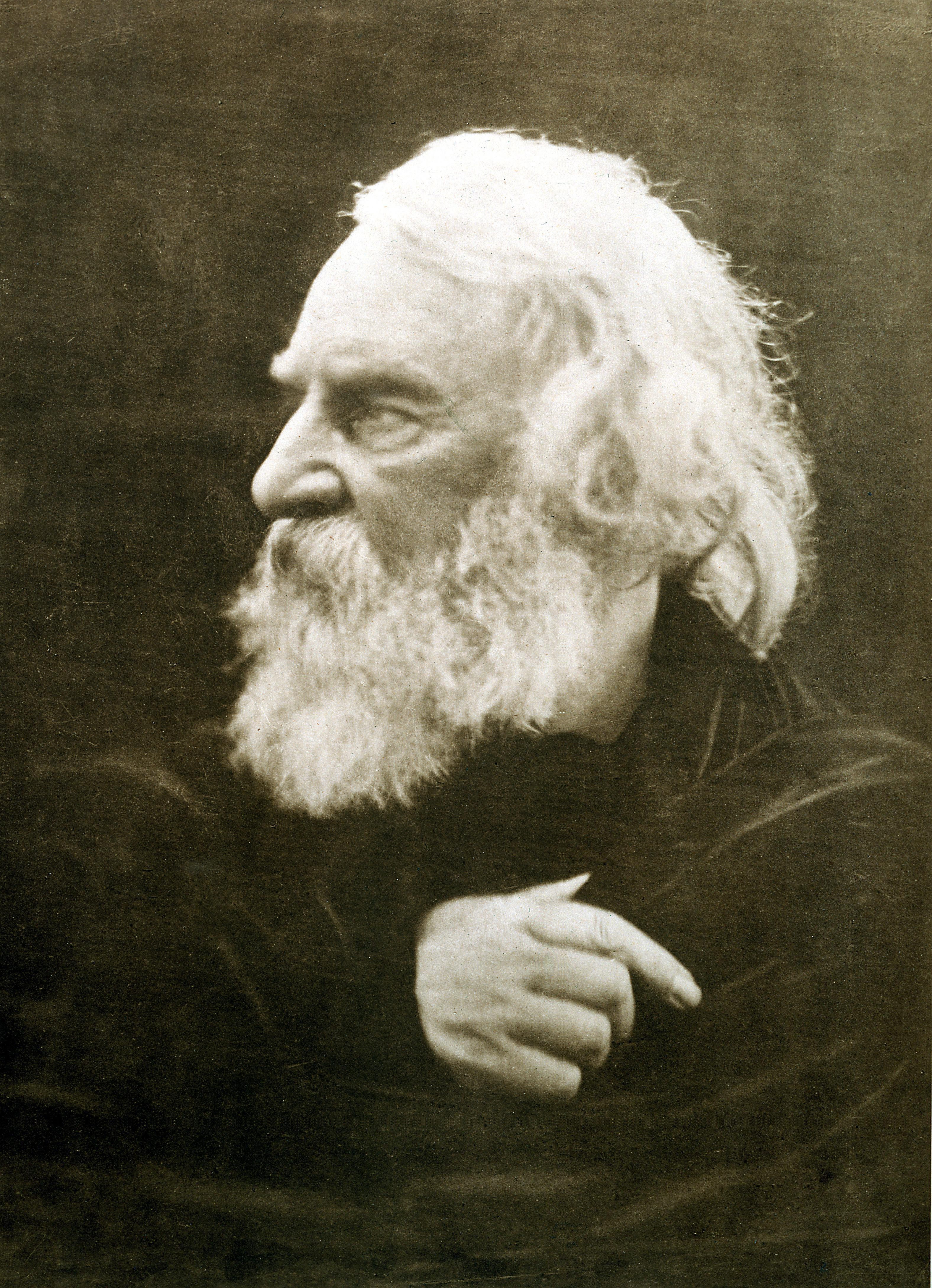
Henry Wadsworth Longfellow via Wikipedia, Public Domain
Longfellow is often revered as one of the most influential American poets, and “Paul Revere’s Ride” is one of his most famous pieces. While this poem does not have much literary analysis because it tells the tale of Revere’s famous ride, its regular rhyme and measure give the impression of a horse galloping through the towns.
Through this poem, Longfellow memorialized Paul Revere’s famous ride. He received inspiration from a tour of Boston he took, giving him the chance to see many of the sights of the famous day for himself. He did take some poetic license in his work, but his line “one, if by land, and two, if by sea” immortalized the signal lanterns that were part of the historic event.
“Listen, my children, and you shall hear Of the midnight ride of Paul Revere, On the eighteenth of April, in Seventy-Five: Hardly a man is now alive Who remembers that famous day and year.”
20. “Ozymandias” by Percy Bysshe Shelley
“Ozymandias” is a sonnet by Percy Bysshe Shelley, a 19th-century English Romantic poet. The poem received its inspiration from the Rameses II statue on display at the British Museum during Shelley’s time. It warns against hubris and arrogance, which are common in great leaders.
The sonnet uses iambic pentameter. It showcases the sad image of a fallen statue that once stood to head the greatness of the Pharaoh. Where once a mighty king ruled the land, nothing is left but a decaying, wrecked statute. To learn more, check out our round-up of the best 10 concrete poems!
“And on the pedestal, these words appear: My name is Ozymandias, King of Kings; Look on my Works, ye Mighty, and despair! Nothing beside remains. Round the decay Of that colossal Wreck, boundless and bare The lone and level sands stretch far away.”
Famous inspirational poems
Some of the best-loved poems are the ones people turn to for courage. Alongside Henley’s “Invictus” above, these are the inspirational poems readers return to again and again:
- “Phenomenal Woman” by Maya Angelou — a celebration of self-possession and quiet confidence, and a companion piece to “Still I Rise.”
- “Hope is the Thing with Feathers” by Emily Dickinson — hope imagined as a small bird that sings through the fiercest storm and never stops.
- “Dreams” by Langston Hughes — a short, urgent plea to hold fast to your dreams, because life without them is a broken-winged bird.
- “Desiderata” by Max Ehrmann — a calm set of instructions for living well amid noise and haste.
- “Don’t Quit” by Edgar A. Guest — the classic keep-going poem, endlessly quoted when perseverance is the only way through.
For more uplifting verse, and a tool that finds poems in a similar spirit, see our companion guide to poems like Invictus.
About this guide: Written by Bryan Collins, writer and founder of Become a Writer Today. Our recommendations are based on hands-on testing and independent research. Become a Writer Today does not accept payment for rankings or recommendations.
Read the poems in full: browse our free searchable poetry anthology of classic public-domain poems, or explore poems like Invictus.
Read the public-domain poems from this list in full
These poems from the list above are in the public domain and held in our anthology, so you can read each one here exactly as published. Search or filter, click a title to expand it, and scan any poem's meter with one click.
Showing 6 of 6 poems
No poems match those filters. Try clearing one of them.
The Road Not Takenby Robert FrostEarly Modern · Medium · 20 linesnaturetime
Two roads diverged in a yellow wood, And sorry I could not travel both And be one traveler, long I stood And looked down one as far as I could To where it bent in the undergrowth; Then took the other, as just as fair, And having perhaps the better claim, Because it was grassy and wanted wear; Though as for that the passing there Had worn them really about the same, And both that morning equally lay In leaves no step had trodden black. Oh, I kept the first for another day! Yet knowing how way leads on to way, I doubted if I should ever come back. I shall be telling this with a sigh Somewhere ages and ages hence: Two roads diverged in a wood, and I-- I took the one less traveled by, And that has made all the difference.
Scan this poem →Count its syllables →
Public domain. Source: Project Gutenberg #29345. Link to this poem
Sonnet 18: Shall I compare thee to a summer's day?by William ShakespeareRenaissance · Short · 14 linesnature
Shall I compare thee to a summer's day? Thou art more lovely and more temperate: Rough winds do shake the darling buds of May, And summer's lease hath all too short a date: Sometime too hot the eye of heaven shines, And often is his gold complexion dimm'd, And every fair from fair sometime declines, By chance, or nature's changing course untrimm'd: But thy eternal summer shall not fade, Nor lose possession of that fair thou ow'st, Nor shall death brag thou wander'st in his shade, When in eternal lines to time thou grow'st, So long as men can breathe, or eyes can see, So long lives this, and this gives life to thee.
Scan this poem →Count its syllables →
Public domain. Source: PoetryDB. Link to this poem
I Wandered Lonely As A Cloudby William WordsworthRomantic · Medium · 24 linesnature
I wandered lonely as a cloud That floats on high o'er vales and hills, When all at once I saw a crowd, A host, of golden daffodils; Beside the lake, beneath the trees, Fluttering and dancing in the breeze. Continuous as the stars that shine And twinkle on the milky way, They stretched in never-ending line Along the margin of a bay: Ten thousand saw I at a glance, Tossing their heads in sprightly dance. The waves beside them danced, but they Out-did the sparkling leaves in glee; A poet could not be but gay, In such a jocund company! I gazed—and gazed—but little thought What wealth the show to me had brought: For oft, when on my couch I lie In vacant or in pensive mood, They flash upon that inward eye Which is the bliss of solitude; And then my heart with pleasure fills, And dances with the daffodils.
Scan this poem →Count its syllables →
Public domain. Source: PoetryDB. Link to this poem
She Walks in Beautyby George Gordon, Lord ByronRomantic · Medium · 18 lineslovenight
She walks in Beauty, like the night Of cloudless climes and starry skies; And all that's best of dark and bright Meet in her aspect and her eyes: Thus mellowed to that tender light Which Heaven to gaudy day denies. One shade the more, one ray the less, Had half impaired the nameless grace Which waves in every raven tress, Or softly lightens o'er her face; Where thoughts serenely sweet express, How pure, how dear their dwelling-place. And on that cheek, and o'er that brow, So soft, so calm, yet eloquent, The smiles that win, the tints that glow, But tell of days in goodness spent, A mind at peace with all below, A heart whose love is innocent!
Scan this poem →Count its syllables →
Public domain. Source: PoetryDB. Link to this poem
The Ravenby Edgar Allan Poe19th-Century American · Long · 113 lineslovemortalitynaturehopegrieffaithseanight
Once upon a midnight dreary, while I pondered, weak and weary, Over many a quaint and curious volume of forgotten lore-- While I nodded, nearly napping, suddenly there came a tapping, As of some one gently rapping--rapping at my chamber door. "'Tis some visitor," I muttered, "tapping at my chamber door-- Only this and nothing more." Ah, distinctly I remember, it was in the bleak December, And each separate dying ember wrought its ghost upon the floor. Eagerly I wished the morrow;--vainly I had sought to borrow From my books surcease of sorrow--sorrow for the lost Lenore-- For the rare and radiant maiden whom the angels name Lenore-- Nameless here for evermore. And the silken sad uncertain rustling of each purple curtain Thrilled me--filled me with fantastic terrors never felt before; So that now, to still the beating of my heart, I stood repeating "'Tis some visitor entreating entrance at my chamber door-- Some late visitor entreating entrance at my chamber door;-- This it is and nothing more." Presently my soul grew stronger; hesitating then no longer, "Sir," said I, "or Madam, truly your forgiveness I implore; But the fact is I was napping, and so gently you came rapping, And so faintly you came tapping--tapping at my chamber door, That I scarce was sure I heard you"--here I opened wide the door:-- Darkness there and nothing more. Deep into that darkness peering, long I stood there wondering, fearing, Doubting, dreaming dreams no mortal ever dared to dream before; But the silence was unbroken, and the darkness gave no token, And the only word there spoken was the whispered word, "Lenore!" This I whispered, and an echo murmured back the word, "Lenore!" Merely this and nothing more. Back into the chamber turning, all my soul within me burning, Soon I heard again a tapping, somewhat louder than before. "Surely," said I, "surely that is something at my window lattice; Let me see, then, what thereat is, and this mystery explore-- Let my heart be still a moment, and this mystery explore;-- 'Tis the wind and nothing more." Open here I flung the shutter, when, with many a flirt and flutter, In there stepped a stately Raven of the saintly days of yore; Not the least obeisance made he: not an instant stopped or stayed he; But, with mien of lord or lady, perched above my chamber door-- Perched upon a bust of Pallas just above my chamber door-- Perched, and sat, and nothing more. Then this ebony bird beguiling my sad fancy into smiling, By the grave and stern decorum of the countenance it wore, "Though thy crest be shorn and shaven, thou," I said, "art sure no craven, Ghastly grim and ancient Raven wandering from the Nightly shore-- Tell me what thy lordly name is on the Night's Plutonian shore!" Quoth the Raven, "Nevermore." Much I marvelled this ungainly fowl to hear discourse so plainly, Though its answer little meaning--little relevancy bore; For we cannot help agreeing that no living human being Ever yet was blessed with seeing bird above his chamber door-- Bird or beast upon the sculptured bust above his chamber door, With such name as "Nevermore." But the Raven, sitting lonely on that placid bust, spoke only That one word, as if his soul in that one word he did outpour. Nothing further then he uttered--not a feather then he fluttered-- Till I scarcely more than muttered, "Other friends have flown before-- On the morrow _he_ will leave me, as my hopes have flown before." Then the bird said, "Nevermore." Startled at the stillness broken by reply so aptly spoken, "Doubtless," said I, "what it utters is its only stock and store, Caught from some unhappy master whom unmerciful Disaster Followed fast and followed faster till his songs one burden bore-- Till the dirges of his Hope the melancholy burden bore Of 'Never--nevermore.'" But the Raven still beguiling all my sad soul into smiling, Straight I wheeled a cushioned seat in front of bird and bust and door; Then, upon the velvet sinking, I betook myself to linking Fancy unto fancy, thinking what this ominous bird of yore-- What this grim, ungainly, ghastly, gaunt, and ominous bird of yore Meant in croaking "Nevermore." This I sat engaged in guessing, but no syllable expressing To the fowl whose fiery eyes now burned into my bosom's core; This and more I sat divining, with my head at ease reclining On the cushion's velvet lining that the lamp-light gloated o'er, But whose velvet violet lining with the lamp-light gloating o'er, _She_ shall press, ah, nevermore! Then, methought, the air grew denser, perfumed from an unseen censer Swung by Seraphim whose foot-falls tinkled on the tufted floor. "Wretch," I cried, "thy God hath lent thee--by these angels he hath sent thee Respite--respite aad nepenthé from thy memories of Lenore! Quaff, oh quaff this kind nepenthé, and forget this lost Lenore!" Quoth the Raven, "Nevermore." "Prophet!" said I, "thing of evil!--prophet still, if bird or devil!-- Whether Tempter sent, or whether tempest tossed thee here ashore, Desolate yet all undaunted, on this desert land enchanted-- On this home by Horror haunted--tell me truly, I implore-- Is there--_is_ there balm in Gilead?--tell me--tell me, I implore!" Quoth the Raven, "Nevermore." "Prophet!" said I, "thing of evil!--prophet still, if bird or devil! By that Heaven that bends above us--by that God we both adore-- Tell this soul with sorrow laden if, within the distant Aidenn, It shall clasp a sainted maiden whom the angels name Lenore-- Clasp a rare and radiant maiden whom the angels name Lenore." Quoth the Raven, "Nevermore." "Be that word our sign of parting, bird or fiend!" I shrieked, upstarting-- "Get thee back into the tempest and the Night's Plutonian shore! Leave no black plume as a token of that lie thy soul hath spoken! Leave my loneliness unbroken!--quit the bust above my door! Take thy beak from out my heart, and take thy form from off my door!" Quoth the Raven, "Nevermore." And the Raven, never flitting, still is sitting, still is sitting On the pallid bust of Pallas just above my chamber door; And his eyes have all the seeming of a demon's that is dreaming, And the lamp-light o'er him streaming throws his shadow on the floor; And my soul from out that shadow that lies floating on the floor Shall be lifted--nevermore!
Scan this poem →Count its syllables →
Public domain. Source: PoetryDB. Link to this poem
Invictusby William Ernest HenleyVictorian · Medium · 16 linesresiliencefaith
Out of the night that covers me, Black as the Pit from pole to pole, I thank whatever gods may be For my unconquerable soul. In the fell clutch of circumstance I have not winced nor cried aloud. Under the bludgeonings of chance My head is bloody, but unbowed. Beyond this place of wrath and tears Looms but the Horror of the shade, And yet the menace of the years Finds, and shall find, me unafraid. It matters not how strait the gate, How charged with punishments the scroll, I am the master of my fate: I am the captain of my soul.
Scan this poem →Count its syllables →
Public domain. Source: Project Gutenberg #1568. Link to this poem
Poems from this list that are not shown here are either still in copyright or not yet in our anthology, so we link to them rather than reprint them. For every poem we can reprint, browse the full poetry anthology.
Frequently asked questions
What is considered the most famous poem of all time?
Robert Frost's The Road Not Taken (1916) is widely considered one of the most famous poems in English. Its closing lines about taking the road less traveled are quoted constantly in films, speeches and book titles. Shakespeare's Sonnet 18 and Poe's The Raven are other frequent contenders.
What are the most famous poems by Maya Angelou?
Still I Rise, published in her 1978 collection And Still I Rise, is Maya Angelou's most celebrated poem. It draws on her experience as a Black American woman and has become an anthem of resilience. Phenomenal Woman, from the same period, is a close second.
What is Shakespeare's most famous poem?
Sonnet 18, which opens 'Shall I compare thee to a summer's day?', is widely regarded as Shakespeare's most famous poem. Written around 1609, it uses the comparison of a beloved to summer to explore beauty, time and the immortality that verse can grant.
Who wrote Invictus and what does it mean?
Invictus was written in 1875 by the English poet William Ernest Henley and first published, untitled, in 1888. Written during a long hospital stay, it is a defiant statement of endurance: its closing lines declare the speaker the master of his fate and the captain of his soul.
Why are famous poems worth studying?
Studying famous poems shows how poets use meter, imagery and rhyme to carry complex emotion. Poems like Frost's Stopping by Woods on a Snowy Evening demonstrate how simple language and technical precision can combine to create lasting literary impact.
The writer's edit
One practical writing tip, a new tool, and a fresh contest deadline, every Thursday. No spam, unsubscribe anytime.